Back to blogging, the long way round
I started blogging around 2005, on Blogger. I had always remembered it as earlier, but the Wayback Machine set me straight: its oldest capture of my old blog is from 2006, and the archive in that page goes back to 2005. Looking back, it's funny how much of the web I take for granted now was being invented in those little sidebars and comment boxes.
The early days
The blog was called Blog do Mário, and it was written in Portuguese.
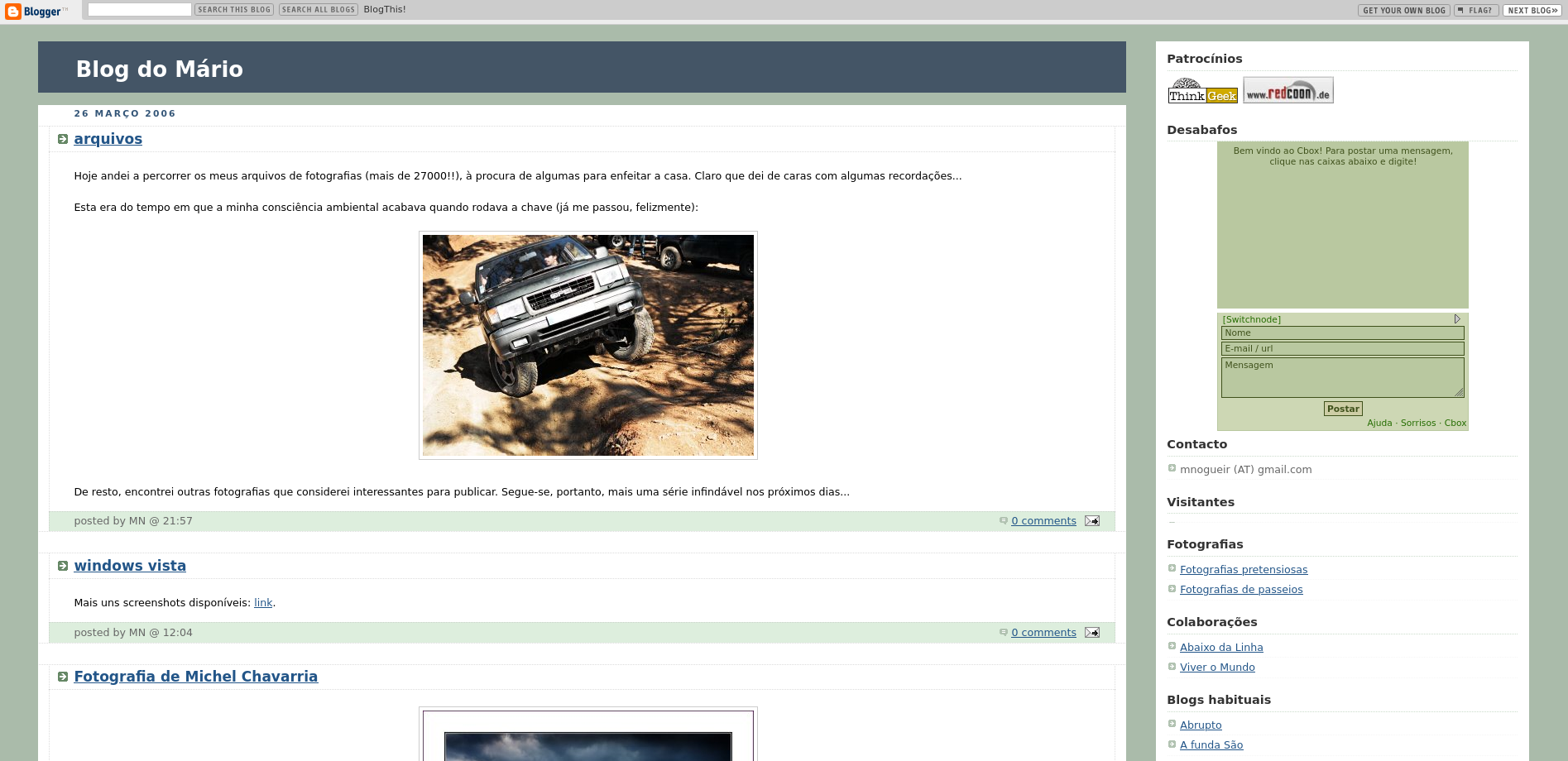
Most of what I wrote back then was about what we would now call memes. Nobody called them that at the time: they were just the funny, strange or clever things that travelled from site to site, and I loved chasing them, collecting them and passing them on. Mixed in were bits of tech news (screenshots of the upcoming Windows Vista, for instance) and, more and more, photographs dug out of my archives. I was quite prolific, posting far more often than I ever have since.
The community was not that big, but it felt more connected than anything I've seen since. We read each other, commented on each other, and linked to each other in our sidebars. Mine had a list of "Blogs habituais" (the blogs I read regularly), a "Colaborações" section for the blogs I also wrote for, and a Cbox shoutbox called "Desabafos" where visitors could leave a quick message. Those lists of links formed a kind of blog ring: you could start on one blog and wander through a whole neighbourhood of people, all of them aware of each other. There was no algorithm deciding who saw what. If you were found, it was because someone you knew had pointed at you.
On and off
After that first period, my blogging became an on-and-off affair. I tried new platforms as they came along: WordPress, Tumblr, and a very short (pun intended) experiment with Twitter. None of them stuck for long.
Part of the reason is that photography slowly took the place of writing. Photography communities like deviantART and, later, Instagram gave me some of what the early blogs had: a place to share, and people to share with. For a while, pictures said what I would otherwise have written.
Static sites
Still, I wanted an online presence that was mine, not a profile on someone else's platform. That led me to static websites. I started with generators like Jekyll, but over time I drifted towards something simpler: shell scripts I wrote myself, publishing to GitHub Pages.
These sites were less about blogging and more about showcasing my photography. The first one, simply called mário nogueira, was organised around monthly collections, "Instantâneos" (snapshots) of each month. The front page showed only the three latest collections, each with a single cover photo, plus a short menu (archive, projects, about) and a link to get new posts by email.
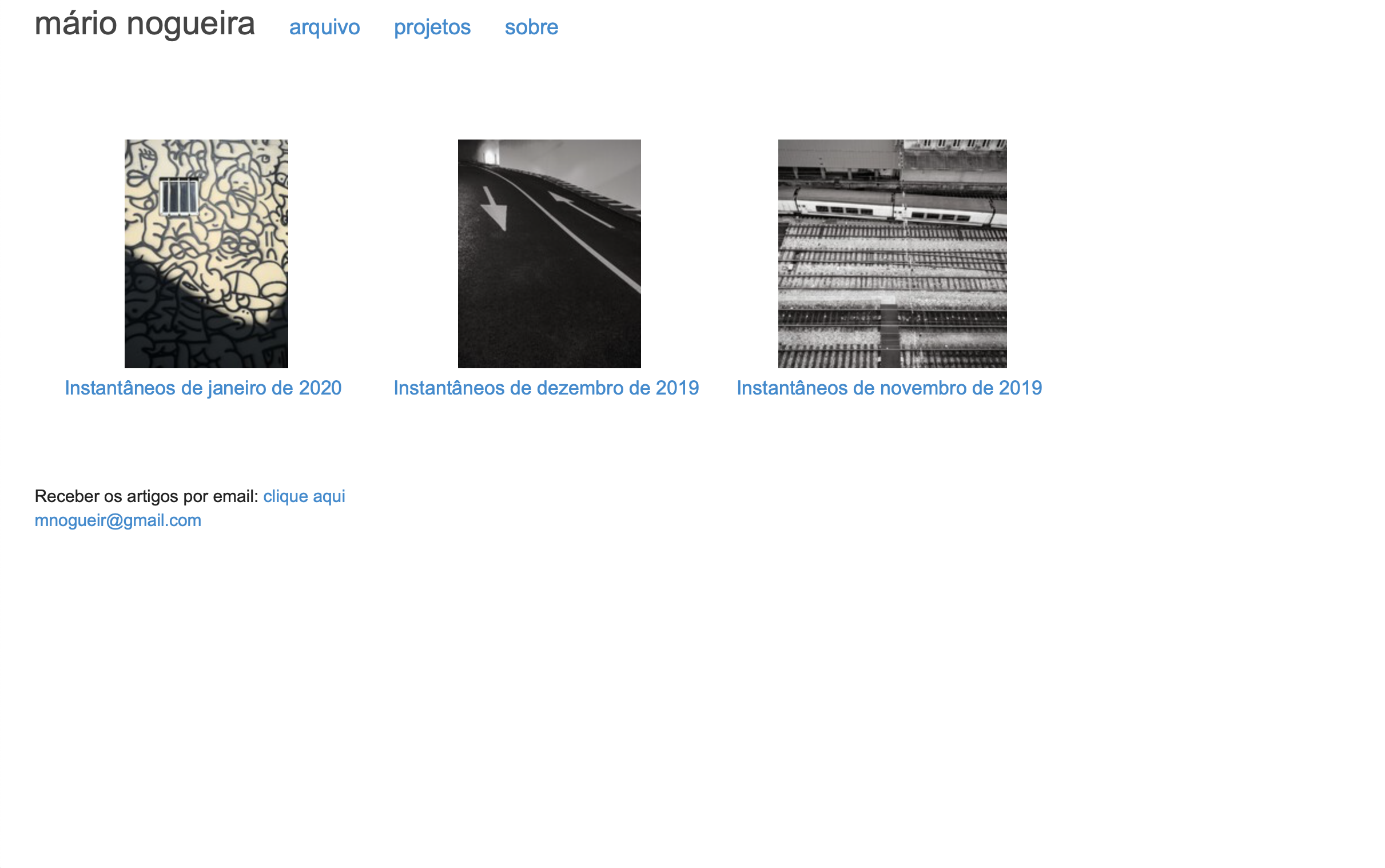
After that I tried a few other formats: regular posts, and also plain portfolio collections, letting the photos stand on their own. I think there were three or four versions of these sites in total, each one a slightly different idea of what "my place on the web" should be.
Coming back
More recently I wanted two things: to move away from GitHub, and to get back to actually writing. Not just photos this time, but posts about my hobbies, about technology, and about whatever else I find interesting.
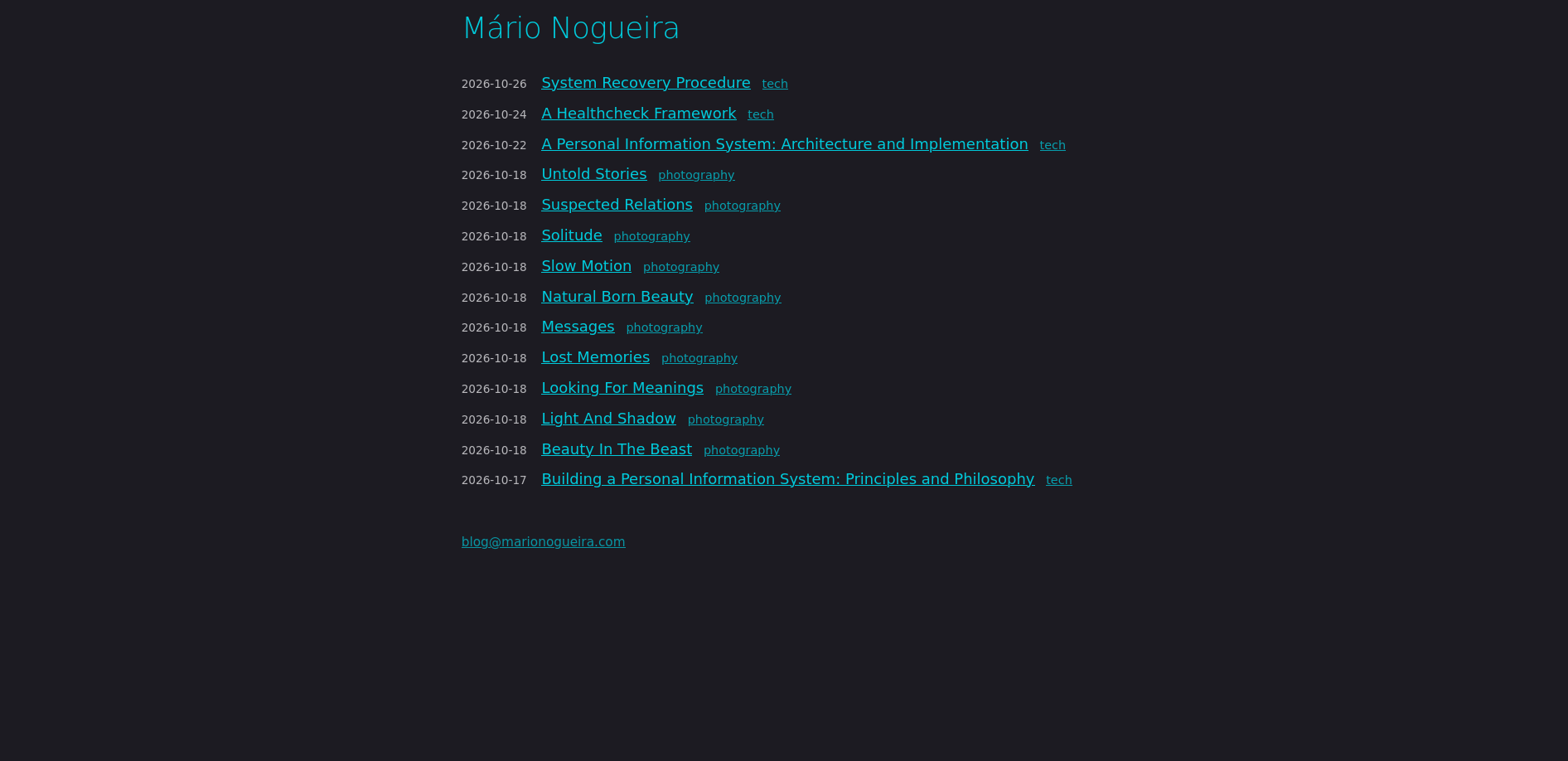
So I built (with Claude's help) yet another small shell-script generator, the one producing the page you're reading now, and moved hosting to the free web hosting that OVHcloud includes with my domain registration. It feels like a return to the beginning: a simple page, my own words, and hopefully a few links to other people's blogs over time.
How this site works
The whole thing is a single POSIX shell script, build.sh, plus cmark to turn Markdown into HTML (lowdown works as well). No frameworks, no package manager, no JavaScript.
Content lives in a folder per post:
posts/YYYY-MM-DD-slug/index.md   first line is "# Title"
posts/YYYY-MM-DD-slug/tags       optional, whitespace-separated tags
posts/YYYY-MM-DD-slug/*.jpg      images and other assets, alongside
posts/_draft-name/               anything starting with _ is a draft, skipped
static/                          copied as-is (stylesheet, favicon)
The date and slug come from the folder name, and the title from the first line of the post. Running ./build.sh wipes and regenerates public/:
- Post pages. Each post is converted to HTML and wrapped in a shared header and footer. The rest of the post folder is copied along with it, so images can be referenced with plain relative paths.
- The index. A list of all posts, newest first, with date, title and tags.
- Tags. Each post can have a
tagsfile. Tags are lowercased and checked (onlya-z,0-9and-are allowed; anything else is skipped with a warning). The script then generates/tags/, with a count per tag, and a/tags/<tag>/page listing the posts for each one. - Atom feed.
feed.xmlholds the full content of the 20 newest posts. Feeds need absolute URLs, so relativesrcandhrefattributes are rewritten to point at the full site address.
Everything is configured through environment variables with sensible defaults (site name, base URL, language, number of feed entries, whether tag pages are generated), so the script itself rarely needs editing.
The styling is one small stylesheet: system fonts, a comfortable reading width of about 68 characters, and automatic light and dark mode through color-scheme, so the page follows the reader's system settings without a single line of extra code.
Publishing is one line:
rclone sync public/ ovh-www:www/
rclone mirrors the generated folder to the OVHcloud hosting, uploading what changed and deleting what's gone. Write, build, sync, done.
It's not much, and that's the point. The whole site fits in my head, and if something breaks I know exactly where to look. That might be what keeps me writing this time.